05 — Game
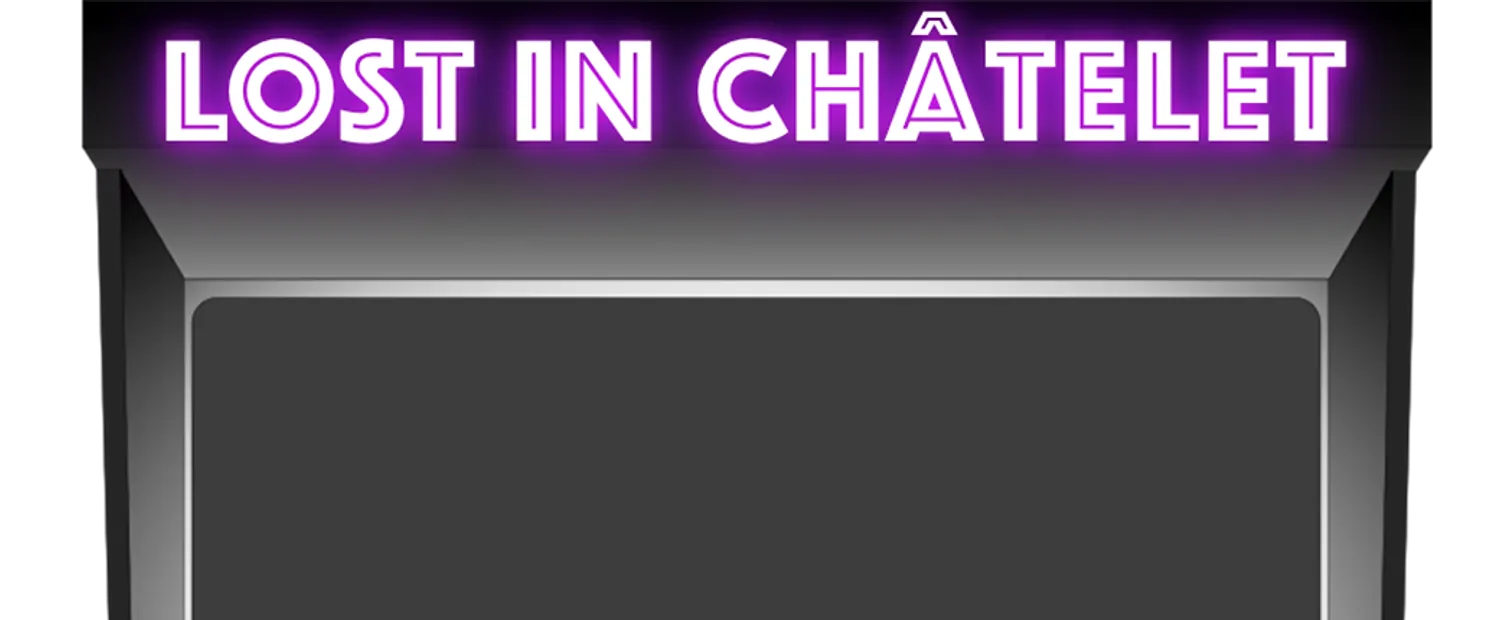
Lost in Châtelet
Find your way out of Europe’s largest underground station
The challenge
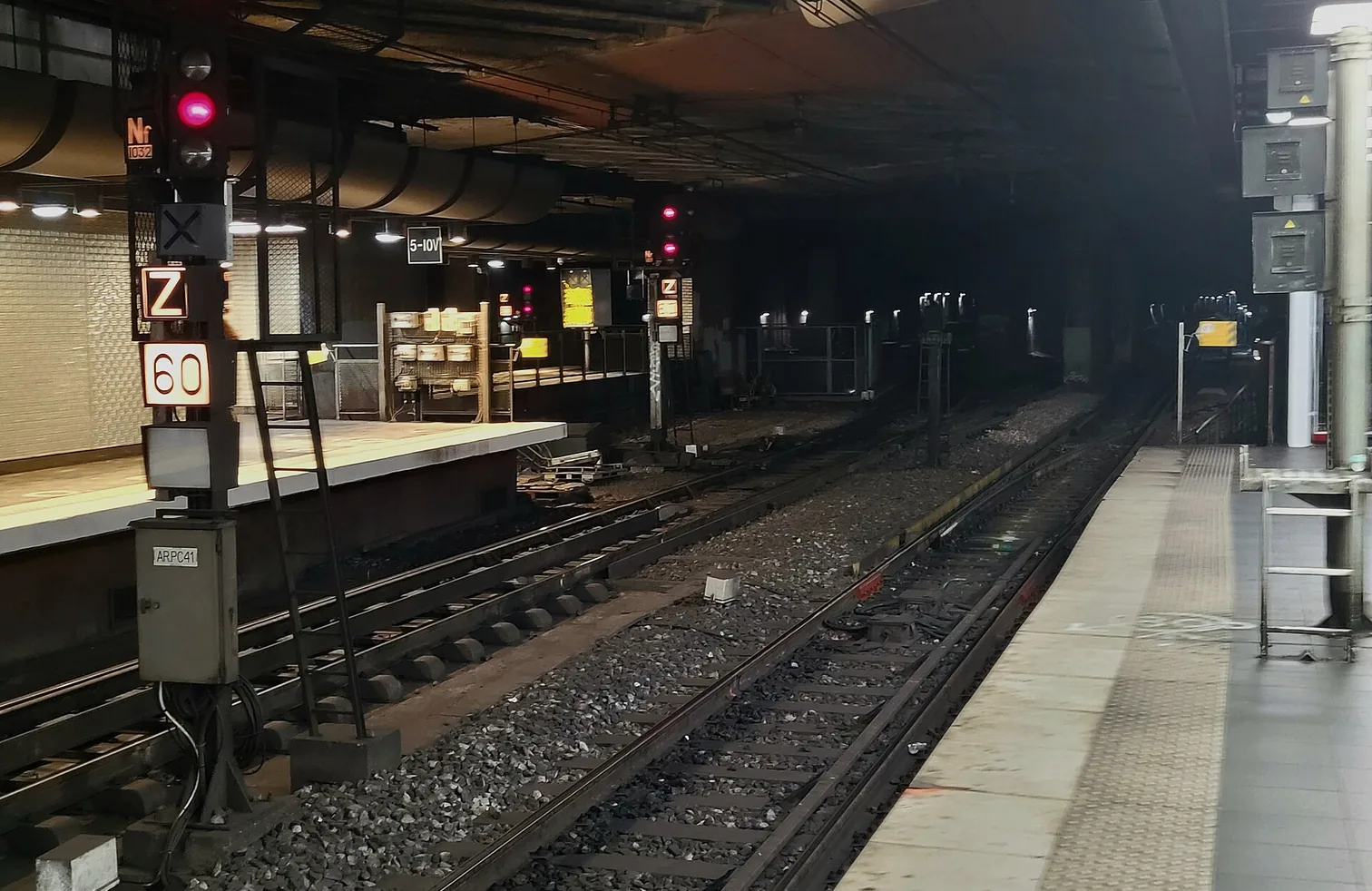
A school brief with one rule: JavaScript only. No framework, no game engine, no canvas library. The subject we chose was Châtelet–Les Halles, the largest underground station in Europe and a place everyone in Paris has been lost in at least once.
The response
A first-person maze rendered from the station’s real signage language — direction plates, line colours, corridor numbering. You navigate the way you actually navigate a metro: by reading signs and guessing.
01 — Approach
Signage as the entire game mechanic.
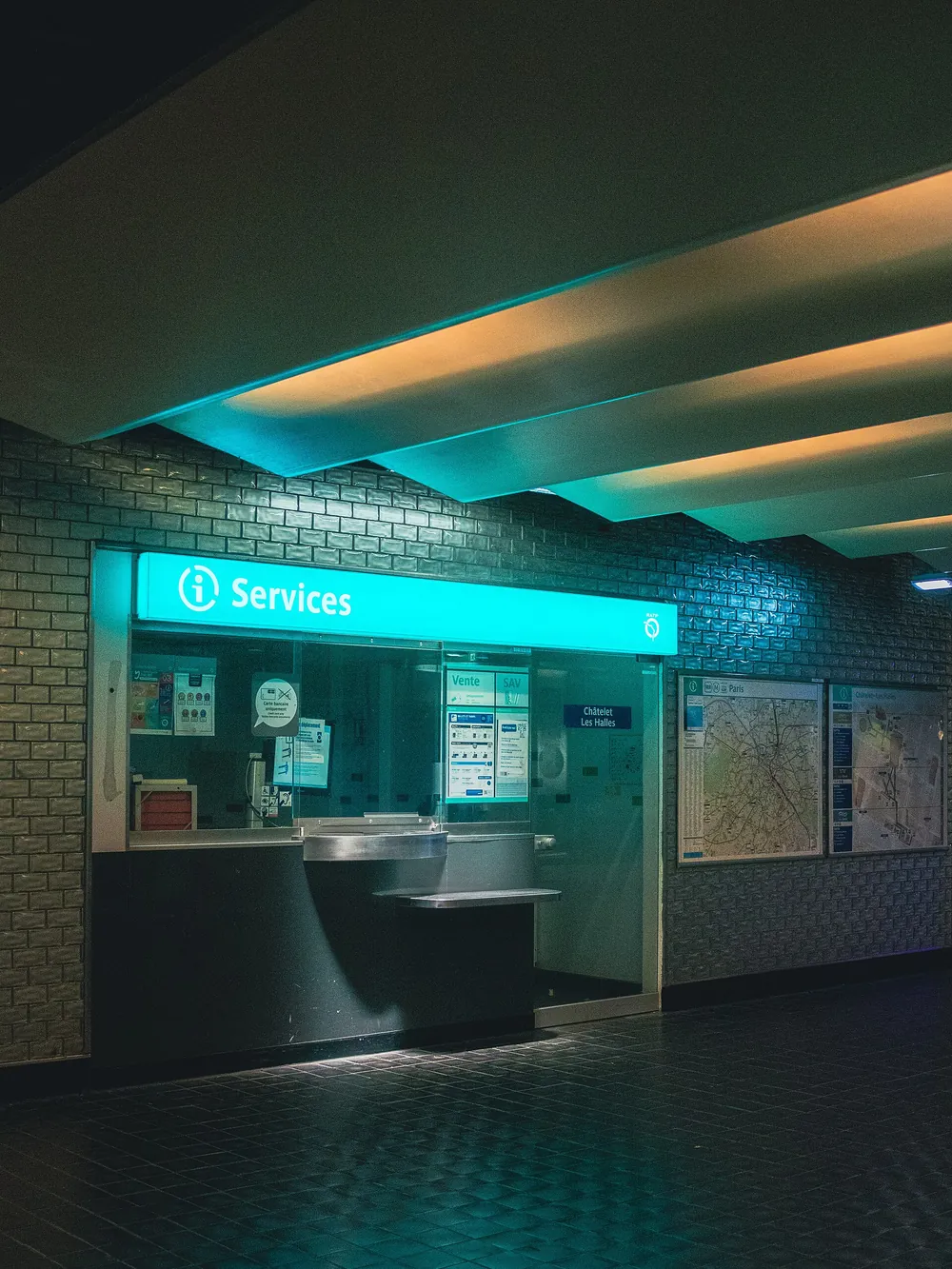
We did not build a map view. The only information you get is what a real corridor gives you: a plate on the wall, a line colour, an arrow. Getting lost is the content, so every wayfinding decision had to be authentic to the station.
02 — Design system
Underground palette, surface typography.
Line colours are the only chroma in the game and they carry meaning exclusively. Everything else is tunnel: sodium light, concrete, and the cold blue of platform lighting.

03 — Development
Vanilla JavaScript, all the way down.
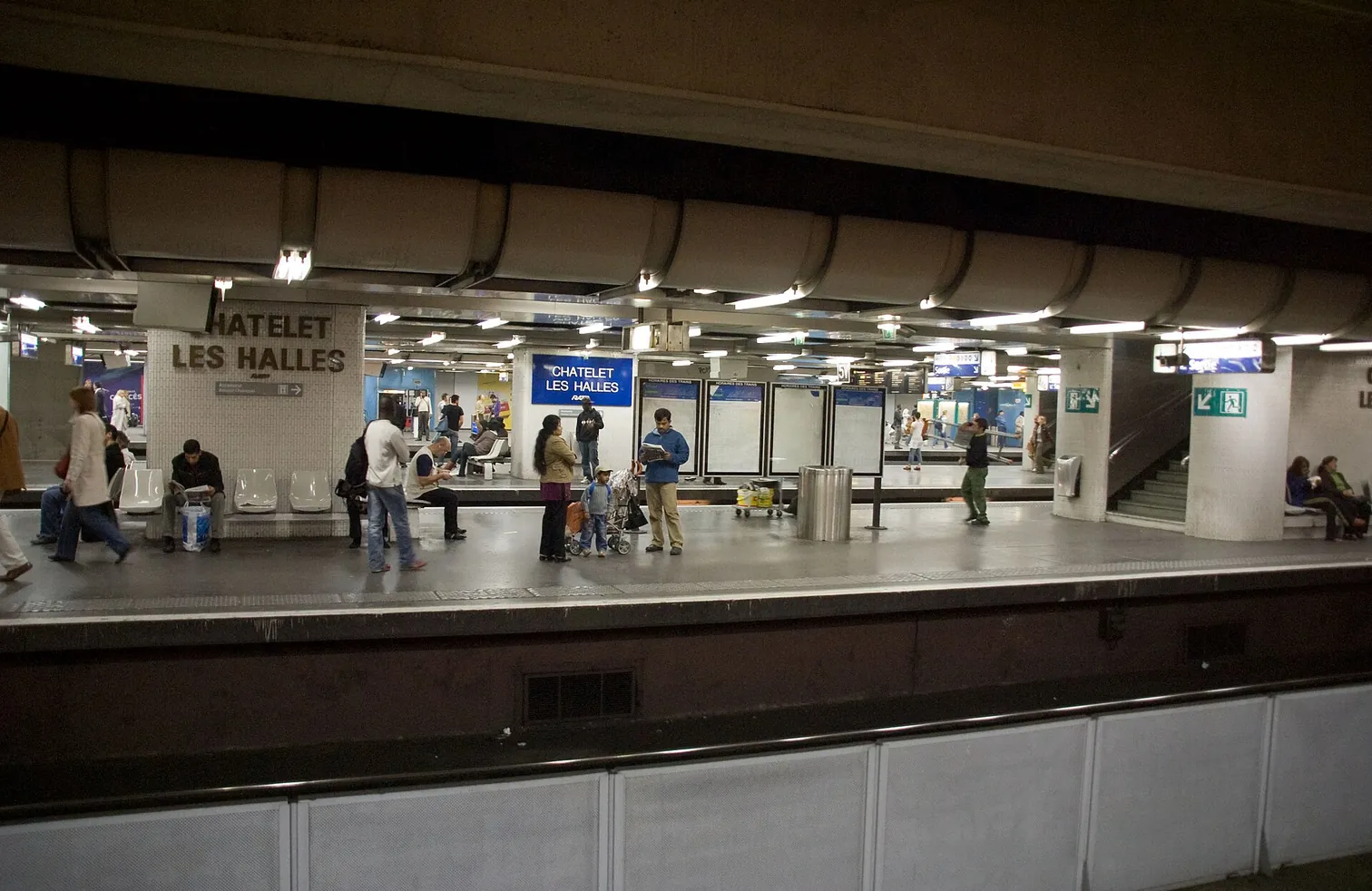
Corridor generation, collision, the render loop, the animation system and the audio cues are all hand-written. Writing a tween function from scratch is the fastest way to understand what a library like GSAP is actually doing for you.
04 — Outcome
The project that made the toolbox make sense.
Building the primitives by hand — timing, interpolation, state — is the reason the motion work in everything since has been deliberate rather than borrowed.
Stack
- Vanilla JavaScript
- DOM rendering
- Procedural generation
Services
- Development
- Game design
- UI / UX design
- Optimisation
Images
- Station photography — Patteloup, CC BY-SA 4.0; Valjo29, CC BY-SA 4.0; poudou99, CC BY-SA 3.0, via Wikimedia Commons

Start something